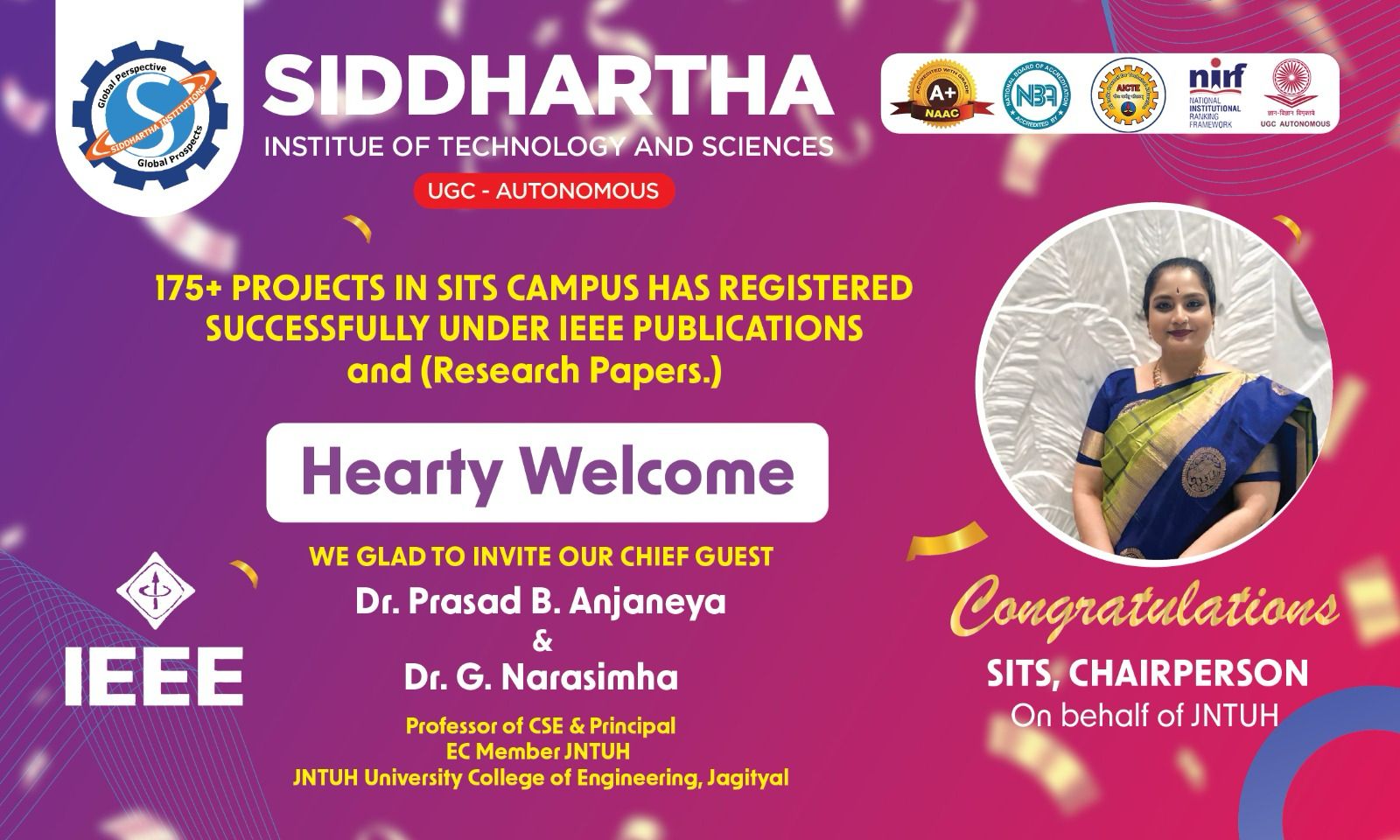
175+ PROJECTS IN SITS CAMPUS HAS REGISTERED SUCCESSFULLY UNDER IEEE PUBLICATIONS and (Research Papers.)
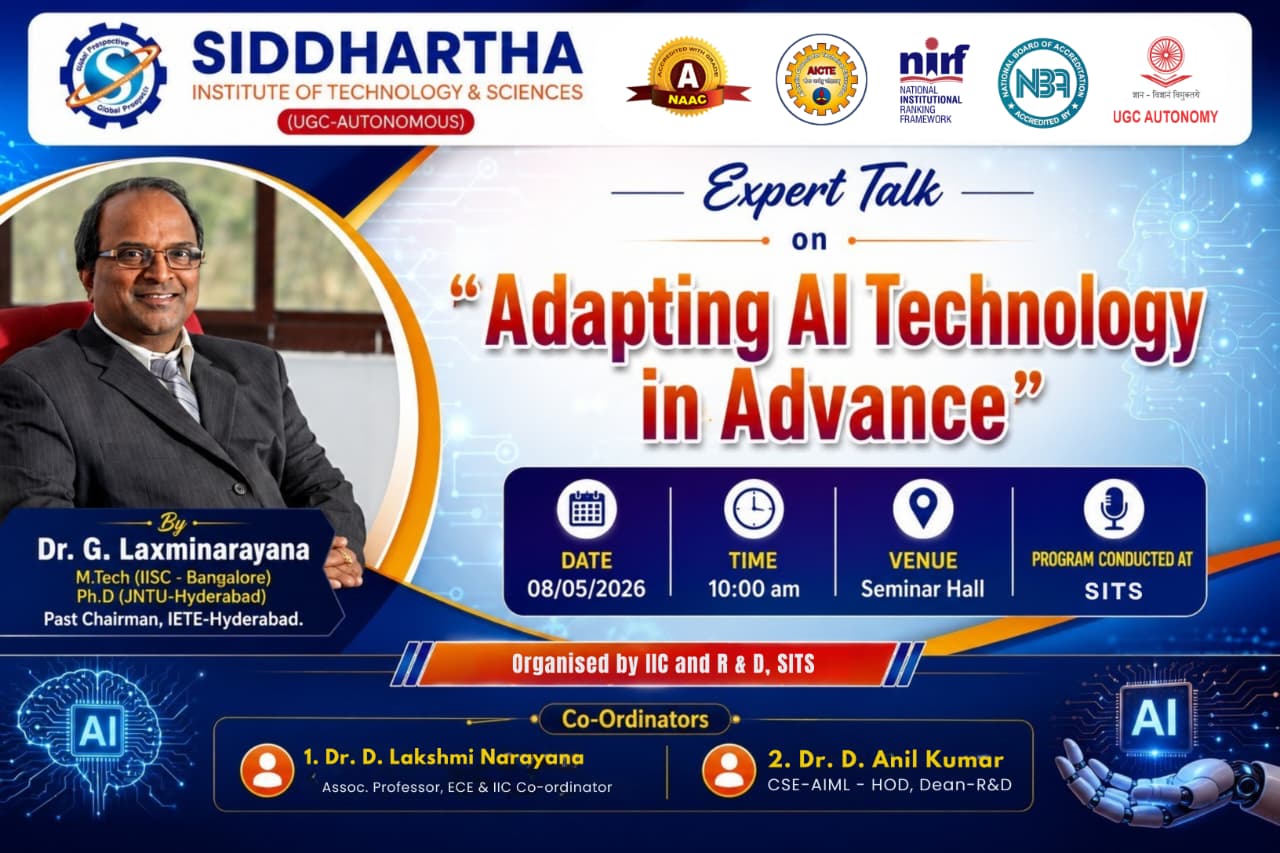
Siddhartha Institute of Technology & Sciences proudly organized an Expert Talk on “Adapting AI Technology in Advance” under the initiative …

The future of engineering education in India is undergoing a major transformation. With rapid technological advancements, Industry 4.0, artificial intelligence, automation, and global digitization, engineering education is shifting from traditional classroom-based learning to a skill-driven, industry-oriented model.
India, being one of the largest producers of engineering graduates, is redefining how engineers are trained, assessed, and placed. This article explores upcoming trends, emerging skills, the role of institutions, and how colleges like Siddhartha Institute of Technology & Science (SITS) are adapting to prepare students for future careers.
The traditional engineering education system focused heavily on theory. However, employers today demand:
Practical skills
Industry exposure
Problem-solving ability
Interdisciplinary knowledge
As a result, the engineering education system in India is evolving to align with global standards and real-world job requirements.
Students exploring best engineering streams in 2026 India are now prioritizing future relevance over conventional popularity.
Engineering colleges are updating curricula to include:
AI & Machine Learning
Data Science & Analytics
Cybersecurity
IoT & Robotics
Institutions that follow industry-aligned syllabi are gaining preference among students and recruiters.
The future focuses on:
Live projects
Internships
Hackathons
Industry certifications
Students are encouraged to “learn by doing,” improving employability.
Engineering education is increasingly supported by:
Virtual labs
Simulation tools
Online learning platforms
AI-based assessments
This digital shift improves accessibility and learning outcomes.
Branches such as:
Computer Science Engineering
AI & ML
Data Science
Cybersecurity
are leading the demand charts.
These streams dominate discussions around engineering streams with best placements.
Autonomous colleges can update syllabi faster and introduce industry-driven courses.
Siddhartha Institute of Technology & Science (SITS) is an example of an institution focusing on:
Modern engineering programs
Practical training
Placement readiness
Skill development initiatives
This approach makes SITS relevant in the future of engineering education in India.
Siddhartha Institute of Technology & Science (SITS) integrates modern teaching methodologies with strong academic foundations.
Industry-aligned engineering programs
Updated laboratories and workshops
Placement training and internships
Emphasis on emerging technologies
Students looking for a Top engineering college in Hyderabad often consider institutions like SITS due to their future-focused education model.
Indian regulatory bodies are actively reshaping engineering education:
AICTE – Encouraging outcome-based education
🌐 https://www.aicte-india.org/
UGC – Supporting multidisciplinary learning
🌐 https://www.ugc.gov.in/
National Education Policy (NEP 2020) – Promotes flexibility, skills, and innovation
🌐 https://www.education.gov.in/nep2020
These initiatives are accelerating the modernization of engineering education in India.
To succeed in the coming decade, engineering students should focus on:
Coding and automation
Data analysis
AI & machine learning fundamentals
Communication and teamwork
Problem-solving and adaptability
Colleges offering structured skill development programs will play a crucial role in shaping future engineers.
The future job market will favor engineers who:
Have multidisciplinary knowledge
Possess hands-on experience
Continuously upskill
Engineering graduates from future-ready colleges will have better access to:
High-paying private sector roles
Startup ecosystems
Global career opportunities
Government and PSU jobs
The future of engineering education in India is skill-based, industry-oriented, and focused on emerging technologies such as AI, data science, automation, and cybersecurity.
Engineering education in India is shifting from theory-based learning to practical training through internships, projects, certifications, and industry collaboration.
Streams like Computer Science Engineering, AI & Machine Learning, Data Science, Cybersecurity, and Electronics will be in high demand in the future.
Future engineers in India need technical skills, coding knowledge, problem-solving ability, communication skills, adaptability, and continuous learning mindset.
NEP 2020 promotes multidisciplinary learning, flexible curricula, skill development, and industry relevance, improving the overall quality of engineering education.
Industry-oriented education helps students gain real-world experience, improve employability, and meet current job market requirements.
Yes, Hyderabad is a major technology and education hub, offering strong opportunities for engineering students in IT, manufacturing, startups, and research.
Engineering colleges shape future careers by providing updated curriculum, modern labs, internships, and placement training aligned with industry needs.
Siddhartha Institute of Technology & Science focuses on industry-aligned programs, skill development, modern labs, and placement support to prepare students for future careers.
Students can prepare by choosing future-ready engineering streams, developing technical and soft skills, gaining practical experience, and selecting industry-focused colleges.
Provide your details, and we’ll contact you soon.