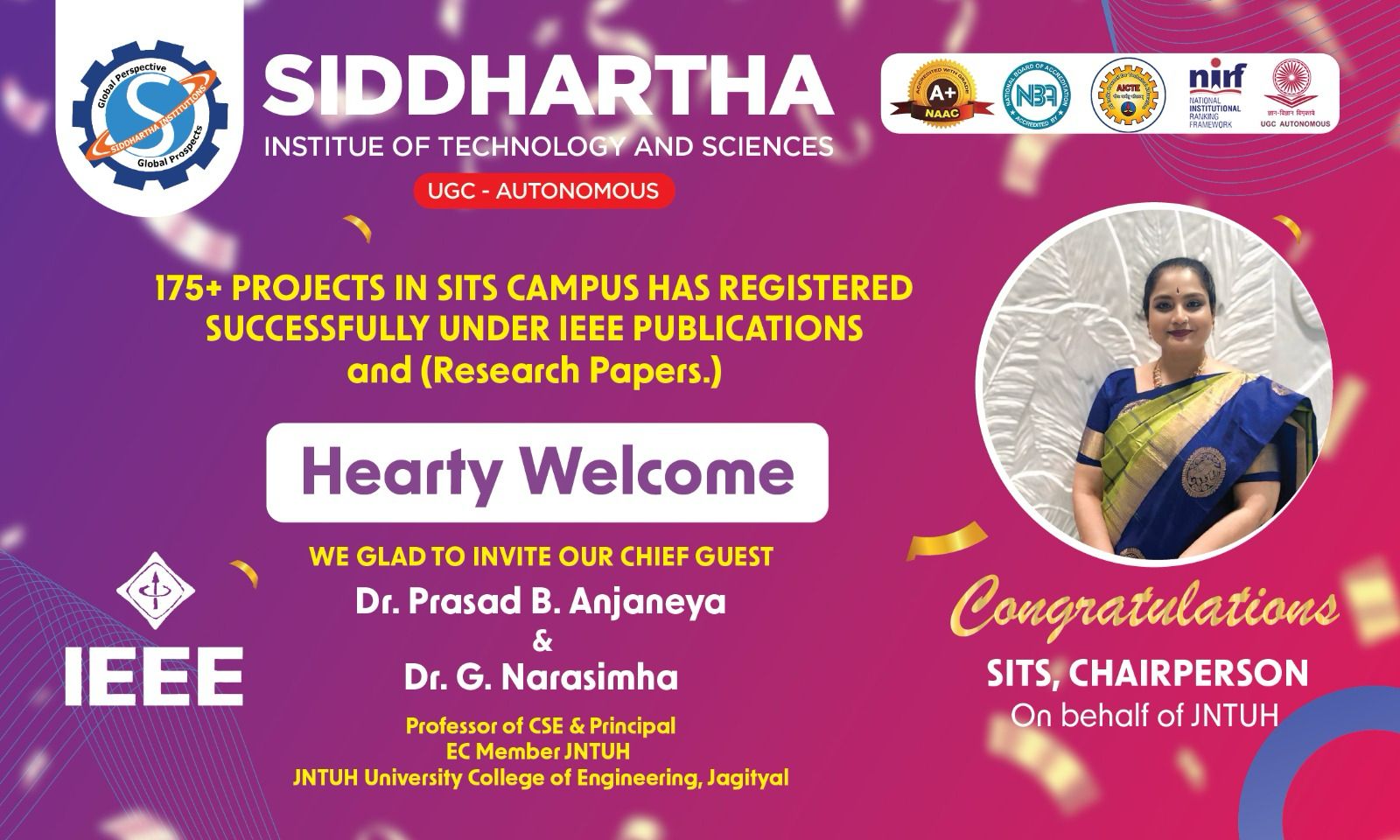
175+ PROJECTS IN SITS CAMPUS HAS REGISTERED SUCCESSFULLY UNDER IEEE PUBLICATIONS and (Research Papers.)
Siddhartha Institute of Technology & Sciences proudly organized an Expert Talk on “Adapting AI Technology in Advance” under the initiative …

The start-up culture in engineering colleges has become a powerful driver of innovation, skill development, and employment generation in India. As the traditional job market becomes more competitive, engineering institutions are increasingly encouraging students to think beyond placements and explore entrepreneurship, innovation, and problem-solving.
Today, engineering colleges play a critical role in shaping future entrepreneurs by offering incubation centers, mentorship, funding opportunities, and industry exposure. This shift is transforming engineering education from job-oriented learning to solution-oriented innovation.
Start-up culture in engineering colleges refers to an environment that promotes:
Innovation and creativity
Entrepreneurial thinking
Risk-taking and experimentation
Real-world problem solving
Colleges that support start-ups encourage students to build products, launch companies, and develop solutions even before graduating.
Start-ups push students to apply theoretical knowledge to real-world problems. Instead of only studying concepts, students build working products, prototypes, and solutions.
Students gain valuable skills such as:
Leadership
Team management
Financial planning
Marketing and product design
These skills are useful whether students start a company or join the workforce.
Start-up culture creates job creators instead of job seekers. Many student-led start-ups grow into full-fledged companies, generating employment for others.
Engineering colleges with strong start-up ecosystems encourage innovation, patent filing, and research-based projects that solve industry and social challenges.
Colleges establish incubation centers that provide:
Workspace
Technical support
Mentorship
Seed funding access
These centers help students convert ideas into viable businesses.
Industry experts and alumni entrepreneurs guide students on:
Product development
Market validation
Scaling strategies
Mentorship reduces failure risk and improves start-up success.
Many colleges integrate entrepreneurship into the academic curriculum through:
Start-up electives
Innovation labs
Credit-based projects
This approach aligns education with real-world needs.
Initiatives like Startup India, AICTE Innovation Cell, and NEP 2020 encourage colleges to promote entrepreneurship.
Engineering colleges partnering with these programs offer students exposure to national-level start-up ecosystems.
Improves college reputation
Attracts industry partnerships
Encourages research funding
Enhances student outcomes
Colleges known for start-up ecosystems are often preferred by students seeking future-ready education.
Institutions such as Siddhartha Institute of Technology & Science (SITS) actively support innovation and entrepreneurship by:
Encouraging student projects and start-up ideas
Providing technical mentoring
Supporting industry interaction
Promoting skill-based learning
Such initiatives help students gain exposure to real-world challenges and prepare them for both entrepreneurship and industry careers.
Despite its benefits, start-up culture faces challenges like:
Lack of funding awareness
Fear of failure among students
Limited exposure to markets
Balancing academics with entrepreneurship
Colleges must address these challenges through structured support and guidance.
The future looks promising as:
More colleges establish innovation hubs
Government support increases
Industry-academia collaboration strengthens
Students become more entrepreneurial
Start-up culture will continue to play a crucial role in shaping future engineers as innovators and leaders.
| Area | Impact |
|---|---|
| Skill Development | Improves technical & business skills |
| Innovation | Encourages patents & research |
| Employability | Enhances problem-solving ability |
| Career Options | Expands beyond placements |
Start-up culture in engineering colleges promotes innovation, entrepreneurship, and real-world problem solving, helping students become job creators instead of job seekers.
Start-up culture helps engineering students gain practical experience, develop leadership skills, and build innovative solutions beyond traditional academics.
Engineering colleges support start-ups through incubation centers, mentorship, industry partnerships, funding access, and innovation-driven curriculum.
Yes, start-up culture improves employability by enhancing problem-solving skills, creativity, teamwork, and industry readiness.
NEP 2020 promotes multidisciplinary learning, innovation, skill development, and entrepreneurship within engineering education.
Colleges like Siddhartha Institute of Technology & Science (SITS) encourage innovation through project-based learning, mentoring, and industry exposure.
Yes, many engineering colleges allow students to work on start-ups alongside academics through flexible policies and incubation support.
The future is strong, with increased government support, industry collaboration, and student interest in entrepreneurship and innovation.
Provide your details, and we’ll contact you soon.